Cybersecurity isn’t only for big companies or IT teams. If you run a small business in the Tampa Bay area—whether you’re a solo entrepreneur, a storefront owner, a contractor, or a growing team—protecting your digital information is as important as locking your front door at the end of the day.
When people hear the word cybersecurity, they often picture the same thing: A “hacker in a hoodie” in a dark room, typing nonstop while dramatic music plays.
That stereotype makes cybersecurity feel distant and overly technical—something only “the IT person” worries about. But for small businesses, cybersecurity is really about protecting personally identifiable information (PII), money, and day‑to‑day operations. It shows up in your business email, your accounting software, your point‑of‑sale system, your online banking, your customer list, and the phones and laptops you and your team use every day.
Every time you send an invoice, run payroll, accept card payments, log into QuickBooks, share a proposal, or give a vendor access to a system, you’re handling information that can be stolen, misused, or held for ransom. In simple terms, cybersecurity means protecting your devices, accounts, and data from unauthorized access, theft, or disruption. For many small businesses, that data includes customer PII (names, emails, phone numbers, addresses), employee records, payment information, and financial documents. And while it’s easy to assume attackers only go after big corporations, small businesses are often targeted because criminals expect fewer safeguards and busy owners who can’t afford downtime.
- Your business email can be hijacked to send fake invoices.
- Your customer list can be stolen and sold.
- Your social media can be taken over and used to scam your audience.
- Your files can be encrypted by ransomware, stopping operations overnight.
- Your employees’ PII (W‑2s, direct deposit info) can be exposed.
High‑profile breaches make headlines, but most small‑business incidents don’t. They show up as “one weird email,” “a vendor changed their payment details,” or “we can’t access our files.” Those moments can quickly turn into real financial loss and a damaged reputation.
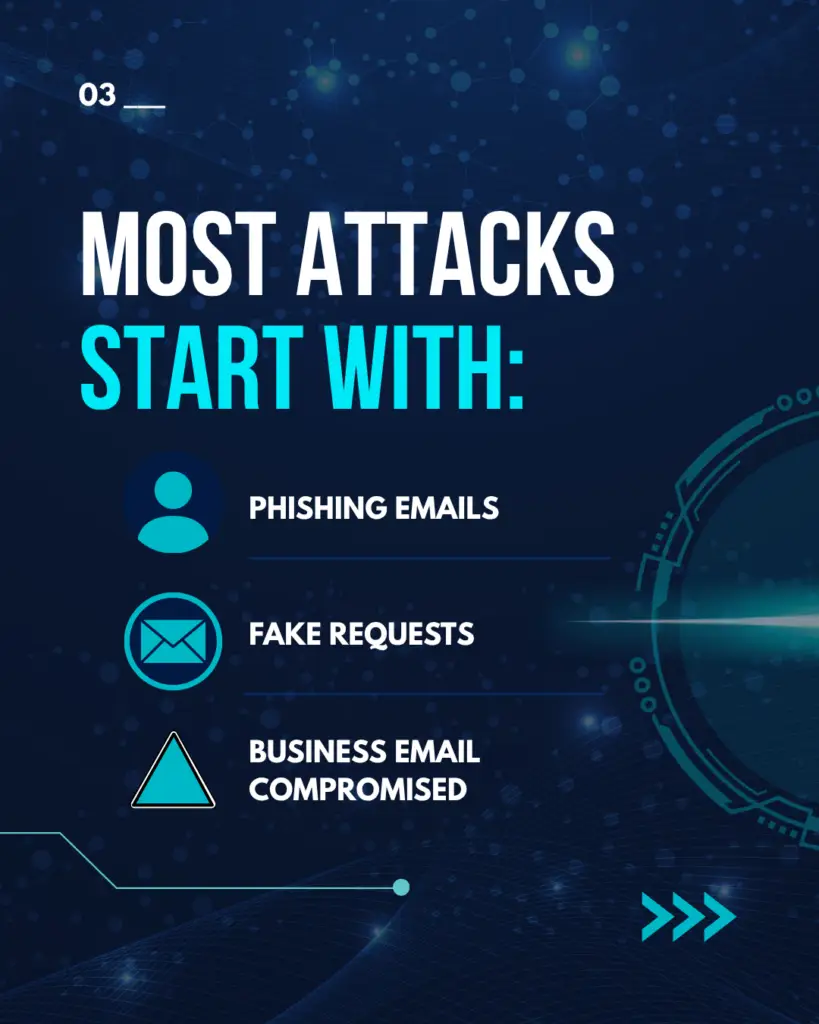
The good news: you don’t need a huge budget to improve your security posture. You need a few consistent habits and a simple plan. Here’s the key point: most cyberattacks don’t start with “advanced hacking.” They start with someone tricking a person.
Common examples include:

• a fake “Microsoft/Google” password reset email
• a message that says your account will be suspended unless you “verify”
• a “vendor” asking you to update bank details for future payments
• an “invoice” attachment that installs malware when opened
This is phishing (and its business version is often called business email compromise). It works because it creates urgency and looks legitimate.
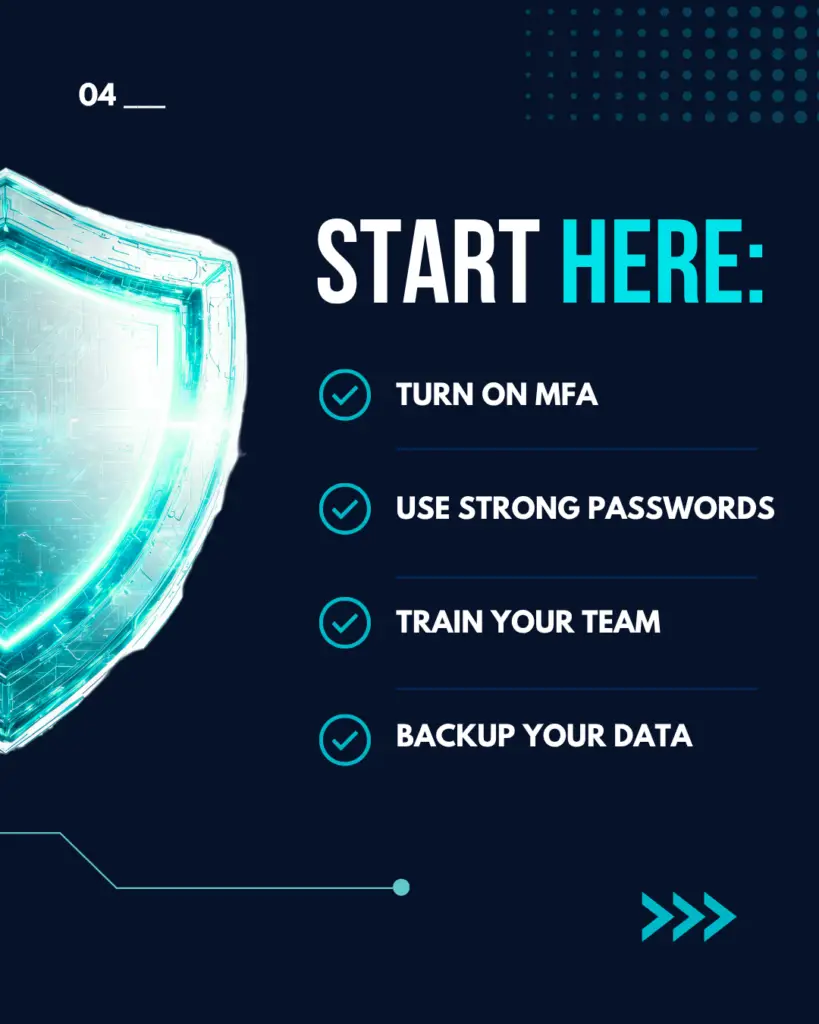
If you do nothing else this week, start here:
- 1) Turn on multi‑factor authentication (MFA) for email, banking, payroll, and social media.
- 2) Use strong, unique passwords (a password manager helps).
- 3) Train your team to spot phishing—especially “urgent” payment or password messages.
- 4) Back up important files (and make sure you can restore them).
- 5) Limit access: only give employees and vendors the permissions they truly need.
Cybersecurity is not just about technology.
It’s awareness, routines, and a culture where it’s okay to slow down and verify before clicking, paying, or sharing information. In this community initiative, we’ll keep sharing basic, practical steps Tampa Bay business owners can use to protect customer PII, reduce fraud risk, and keep operations running. Because in today’s digital business environment, the first line of defense isn’t a tool—it’s the decisions you and your team make every day.
Start small, stay consistent, and protect what you’ve worked so hard to build.
Subscribe to CyberSmart with Paula Sofia Gomez
Practical, easy-to-understand cybersecurity guidance for small businesses and professionals.
Cybersmart Newsletter
Written by:
Paula Sofia Gómez | MBA, PMP, CSM, Certified in Cybersecurity by (ISC²)
cybersmart.newsletter@gmail.com
Information Security Analyst, IAM, GRC | St. Petersburg College
Secretary + Chair of Innovation & Marketing Committee | TBLC
Blog Contributor | DEAL Magazine, CyberSmart Newsletter SubStack